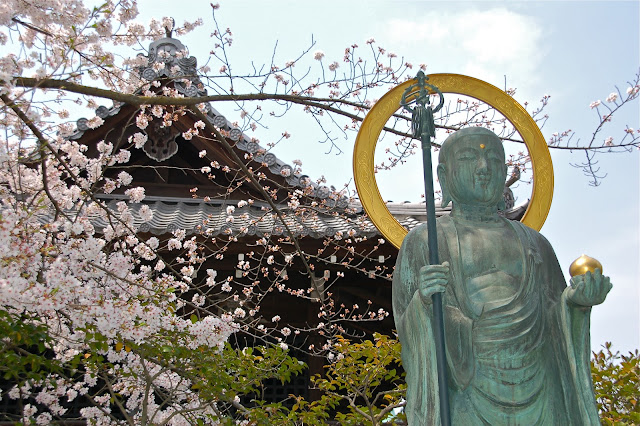
Showing posts with label Kyoto. Show all posts

Friday, March 29, 2013

Simply Azaleas


Azaleas bloom at Hampton Park, Charleston, South Carolina
Azaleas in bloom at Hampton Park in Charleston, South Carolina

Recently while looking through an old photograph album, I came across snapshots of Norfolk, Virginia's 1976 Azalea Festival Parade.  Azalea Queen Susan Ford, whose father served as US president at the time, graced one of the parade floats. 

Norfolk is but one of many cities in the American South that celebrate the azalea. Next weekend (April 5-7, 2013) Summerville, South Carolina hosts the annual Flowertown Festival. Wilmington, NC holds the North Carolina Azalea Festival (April 10-14, 2013). 

Here in the South Carolina Lowcountry azaleas are bursting into bloom. Drive around old neighborhoods and you see enormous shrubs dwarfing small houses. Magenta blossoms are prevalent in my subdivision, yet many of us homeowners can't resist planting a mixture of azalea varieties. Sometimes their colors clash. 


Azalea growing at Tenryu-ji in Kyoto Japan
Azaleas in bloom at Tenryƫ-ji, Kyoto, Japan

azalea hedge
A homeowner in my neighborhood uses azaleas as a hedge
George L. Taber azaleas
George L. Taber azaleas are a favorite of mine. One came with the house. I've planted two more.

white azalea blossoms
These white blossoms (growing on azaleas planted by a previous owner of my house) look to me as though they belong in a wedding bouquet
A dropped azalea blossom in Hampton Park
A dropped blossom at Hampton Park

By the way, at some point the Norfolk festival leadership changed its name to the International Azalea Festival. In 2009 they changed its name again - this time to the Norfolk NATO Festival. That is why when you visit the azaleafestival.org website the focus is not azaleas. 

For more information about azaleas, visit the website of the Azalea Society of America: http://azaleas.org/index.html.

Tuesday, March 26, 2013

Hanami: Cherry Blossom Viewing


Sakura in Kyoto
Hanami 2011: Sakura in Kyoto, Japan less than a month after the triple disaster to the north

In America when we think of cherry trees it might be in relation to   George Washington, our first president, who according to legend said, "I cannot tell a lie, Father. I cut down your cherry tree."

His namesake Washington, DC is famous for the cherry trees that line its Tidal Basin. My 92-year-old mother recalls my late father's long ago promise to take her there in the spring to see the cherry blossoms. He never kept that promise, which seemed odd to me. 
Living in Virginia during the early years of my childhood, I imagined my father to be a  Washington-like figure. Both were land surveyors. Both had an interest in farming. Both had integrity.

People continue to flock to our nation's capital to see the cherry trees in bloom. This year's Cherry Blossom Festival began last week and extends into April. A Wikipedia entry about West Potomac Park tells the interesting story of how Washington, DC got its cherry trees. The idea originated in the nineteenth century with writer and photographer Eliza Ruhamah Scidmore who had spent time in Japan. 

Weeping cherry in Kyoto
A weeping cherry in Kyoto, Japan
And when it comes to cherry blossom (sakura) viewing, I think of Japan where it is known as Hanami and is taken to the level of a national celebration. I've seen tarps spread out along riverbanks in Hiroshima and Ashiya and in a public park on Kobe's Rokko Island, where families picnic and take in the beauty of the delicate blossoms.
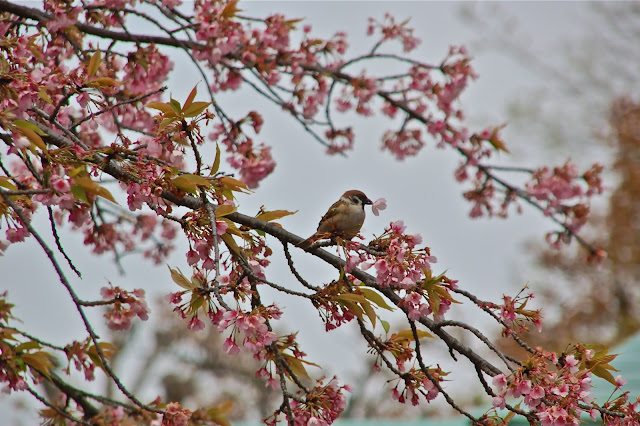

Tree sparrow plucks cherry blossom in Kyoto Japan
A tree sparrow plucks a cherry blossom in Kyoto

Courtesy of Kyoto Journal here's a link to Japan International's 2013 cherry blossom forecast map: http://www.jnto.go.jp/sakura/eng/index.php


Cherry blossoms on young tree in my front yard w/ live oak in the background
The cherry tree I planted in my front yard last year sports its first blossoms in February of this year. (Live oak in the background.)

Thursday, January 31, 2013

Camellias in Bloom


Camellia
My late grandmother Chessie Pearce's camellia
Camden County, North Carolina
Photographed by Edward L. Pearce

This past Saturday the Coastal Carolina Camellia Society held its annual camellia show. According to the Society's FaceBook page, more than 1,000 blooms were entered. I intended to go across town to view the entries, but got busy and forgot until too late. What a great opportunity it would have been to learn more about camellias.

My grandmother, Chessie Pearce, grew a camellia tree in her garden. The tree is at least sixty-five years old but possibly much older. My brother Edward remembers our grandmother saying camellias should be planted on the north side of a pine and also remembers her calling her tree a japonica. Sometime during the 1970s temperatures dropped below zero and the freeze damaged Grandmama's tree. After Edward cut it back to about five feet, it revived. Now, forty-five years after our grandmother's death, the tree is approximately eighteen feet tall and blooms prolifically. 


Camellia tree
Chessie Pearce's camellia tree is more than 65 years old
Photographed by Edward L. Pearce

My knowledge of camellias is not extensive. I'm familiar with japonicas and sasanquas, and with camellia sinensis, the tea plant. These are not, however, the only species of camellias and after doing a bit of reading, I realize it's quite possible that some of the camellias I believed to be japonicas are not.

Here's the local conventional wisdom: Japonica blossoms make beautiful cut flowers, perfect for floating in a glass bowl indoors or in a birdbath outdoors. Sasanqua blossoms don't last when cut. 

Where I live, the sasanquas usually bloom from September to November and japonicas bloom in the winter. 


Variegated camellia japonica
This red and white variegated variety 
grows in my front yard

Camellia japonica
This cream colored camellia sporting 
a wealth of stamens grows near my front door
 
Variegated camellias
A pink and white variegated variety
 growing in my front yard

My one-third acre lot contains a number of camellias. Some, or all, of the seven that came with the house, when I bought it, had been transplanted here from Summerville when the prior homeowner moved his parents into assisted living. One of the seven budded yearly, but never bloomed, and succumbed during a cold winter several years ago. A single one of the remaining six is a sasanqua, which I've had cut back, but has resumed growth. I always assumed the other five were  of the japonica species, but after perusing the American Camellia Society's website this afternoon, I'm not so certain.


White camellia japonica
This white camellia japonica is one I bought, from a plant nursery or garden center, and planted perhaps as much as ten or twelve years ago. It's at the back of the lot and gets little sunlight. Perhaps that's why it's stingy with its gorgeous blossoms. 


My older japonicas produce seeds. In the last three years volunteers have sprouted under an old pink-blossomed tree. With varying success, I've transplanted seedlings to other spots in my yard. I've also given a few away.

When I intentionally planted camellia seeds in the past, either they didn't grow, or I forgot where I planted them and accidentally mowed them down. The seedlings are similar in appearance to those of the homely wild cherry trees that, due to bird droppings, each year produce hundreds of seedlings under my huge live oak and a variety of other shrubs and trees. 

My sister Martha Ann in northeastern North Carolina had success growing a camellia from a seed I gave her years ago. One of her animals, a goat, attempted to eat the small shrub, but now it's growing back.


Camellia seeds and seedpods
This past August I harvested seeds from the five older japonicas
I have not yet taken on the task of identifying the varieties of my camellias. Nor have I been a particularly good steward of them in the past. I hope to remedy that.


Formal double camellia in South Carolina
On the grounds of the Berkeley County
Library, Daniel Island, SC
Formal double camellia growing in Japan
On the Rokko Island greenway, Kobe, Japan


As a result of having family members living in Japan, I have been able to view camellias in bloom at TenryĆ«-ji and other gardens in Kyoto, as well as, in and around Kobe. 


Camellia tree Kobe, Japan
One of a group of camellia trees growing out of rock
 on a hillside above Kobe, Japan in late November

There are plenty of opportunities to see camellias blooming in the American South. At this time of year a stroll through older neighborhoods, such as the one where I live, is a treat for a camellia lover. 

Two weeks from today, Middleton Place begins its annual guided Camellia Walks. Botanist Andre Michaux is said to have introduced the camellia japonica there around 1785. 

Camellia tree
This japonica by my laundry room thrives on afternoon sunlight but needs some TLC


Camellia seed pods and pear in situ
Seed pods in situ
Transplanted camellia seedling
A volunteer that I transplanted

Camellia tree at Tenryu-ji in Kyoto, Japan
April at Tenryƫ-ji temple gardens in Kyoto, Japan
Camellia blossom in Kyoto, Japan
A leaf wants to hide this pretty pink blossom at Tenryƫ-ji

Variegated camellia at Tenryu-ji in Kyoto, Japan
A variegated blossom at TenryĆ«-ji 

Camellia blossom

This one grows by my laundry room


Thank you for visiting The Traveling Gardener. 
Your comments are welcome.

Friday, December 14, 2012

Strolling through Kyoto's Temple Gardens


In Japan, sakura (cherry blossom) viewing is a popular outdoor activity in spring. Momiji (Japanese maple) viewing provides enjoyment in autumn. Kyoto is home to numerous temple gardens, many of them ideal locations for both sakura and momiji. My current favorite Zen gardens are TenryĆ«-ji, Tƍfuku-ji, and Ryƍan-ji, which I visited in April 2011, December 2011, and December 2012, respectively.  

Star magnolia at Tenryu-ji
Star magnolia at Tenryƫ-ji

TenryĆ«-ji, located in Arashiyama on the western outskirts of Kyoto, is famous for its stroll garden. My visit there took place less than a month after the March 11 earthquake. Nonetheless, visitors packed the gardens. The grounds required a separate admission ticket from that of the temple. A stroll through the garden proved worth every yen. 

Sakura at Tenryu-ji
Sakura viewing: TenryĆ«-ji

Quince at Tenryu-ji
Quince in bloom at TenryĆ«-ji

Tƍfuku-ji (Eastern Good Luck Temple), located in southeastern Kyoto, is famous for its valley of red maples and its moss and stone checkerboard. I've previously written about Tƍfuku-ji's moss garden.

Valley of red maples at Tofuku-ji
Momiji viewing: The valley of maples, Tƍfuku-ji
Moss and rock garden at Tofuku-ji
Moss and rock garden, Tƍfuku-ji
Tofuku-ji Hojo garden
The Southern Garden at Tƍfuku-ji's Hojo
The four rock-composites in Tƍfuku-ji's Hojo (Abbot Hall) rock garden represent the Elysian islands. Moss covered mounds represent five sacred mountains.

Moss and stone checkerboard at Tofuku-ji
A bit of the moss and stone checkerboard at Tƍfuku-ji

Ryƍan-ji (the Temple of the Dragon at Peace), located in northwestern Kyoto, is famous for its rock garden. Yet it contains expanses of moss as well. Earlier this week, on Wednesday, two gardeners worked diligently with their small straw brooms near the entrance to the temple grounds, removing fallen maple leaves from the moss carpet.

Buddha at Ryoan-ji
Buddha at Ryƍan-ji
At Ryƍan-ji camellias and quince are just beginning to blossom. The Japanese irises that grow along the edge of Kyoyochi Pond won't bloom until months from now. Flowers aren't the big draw to the gardens at this time of year - the trees are. Many of the maples have yet to lose the last of their leaves. 

Winter will be here officially in just a few short days. This season is an ideal time to appreciate evergreens and to observe the previously hidden structures of deciduous trees. At Ryƍan-ji quite a few trees sport braces to support and shape trunks and limbs. 
Kyoyochi pond at Ryoan-ji
Kyoyochi pond at Ryƍan-ji
Aspidistra (Cast Iron Plant) at Ryoan-ji
Aspidistra (Cast Iron Plant) at Ryƍan-ji 
The dry landscape of Ryƍan-ji consists of white gravel and fifteen rocks and is believed to have been created by a Zen monk, around 1500 AD, at the end of the Muromachi period. The wall that separates this rock garden from the landscape garden is made of clay once boiled in oil. Subsequent seepage resulted in the creation of patterns along the old wall.
Ryoan-ji's dry landscape rock garden
A corner of Ryƍan-ji's dry landscape or rock garden
Tree brace at Ryoan-ji
A tree brace at Ryƍan-ji
Stone washbasins at Ryoan-ji
The inscription on this stone washbasin at Ryƍan-ji: I learn only to be contented.
Dining
Both TenryĆ«-ji and Ryƍan-ji have restaurants on the premises. Reservations are recommended for TenryĆ«-ji, where Zen cuisine is served. 
Restaurant at Ryoan-ji
Ryƍan-ji's restaurant overlooks the garden

Bridge over the pond at Ryoan-ji
Bridge over the pond at Ryƍan-ji

Thank you for visiting. Your comments are welcome.

Links to the individual temple websites:

Tuesday, October 16, 2012

Blazing Autumn

Autumn color at the Kobe Municipal Arboretum in Japan
Russet, golden, deep wine, butternut, brick, lime, tan. These are but a few of the colors that leaves in the northern hemisphere turn during the last three months of the calendar year.

Here in the Lowcountry, we don't often get a colorful autumn and most of our leaf color arrives in late November. Our ubiquitous live oaks drop their leaves in the spring and never sport the bright colors of Japanese maples or ginkgo trees. The native dogwoods and Virginia creeper provide a bit of color but not enough to make it appear that we have four distinct seasons.
Autumn leaves in Savannah, Georgia on Thanksgiving Day 2010


A few days ago, I drove through the North Carolina mountains on my way to Kentucky and Tennessee. During the drive up, I didn't see much leaf color. The single stretch where trees with brilliant yellow leaves lined the interstate highway happened to be where the road is most narrow. Tractor-trailer trucks whizzed along far too close to one another in the right lane and the driver of the large pickup truck behind my car in the left lane seemed to want me to drive more than ten miles an hour above the speed limit. No leaf peeping for me!  
Autumn color at the North Carolina Welcome Center on I-40
near the Tennessee state line early yesterday afternoon
Thursday morning as I walked along Main Street in Danville, Kentucky I viewed the trees and ornamental plantings, as around me townspeople, and visitors in town for the Vice Presidential debate, chatted on Main Street, enjoying a crisp, clear day. The ginko trees that line this charming town had just begun to go from green to yellow.  Maples blushed, but many continued to contain branches that bore partially green leaves. Purple petunias and orangey geraniums brightened up the exterior of a real estate office while pots of yellow or lavender mums stood near other doorways.    
Fallen leaves near the labyrinth in Danville, Kentucky
Ginkgo trees line Main Street in Danville, Kentucky
On the day of the Vice Presidential debate at Centre College, the leaves 

on  the sunlit side of the street had just begun the transition to yellow
Friday morning driving down US 127 on my way to Nashville, I witnessed gorgeous fall colors. The trees formed mosaics on the sides of hills. On Sunday on I-65, I saw trees growing from natural rock walls. Sometimes they alternated in color as if someone had implemented a landscaper's design: yellow, red, butternut, yellow, red, butternut.    

On a walk though the woods with a friend in Tennessee, I saw plenty of colorful dropped leaves. Black walnuts, hickory nuts, and tiny persimmons also were scattered along the path. As we approached Sycamore Creek, a large flock of blackbirds (starlings, perhaps) flew in and settled in the tops of trees. 

One of my favorite past-times, during autumn and winter, is watching flocks of blackbirds gather and disperse, gather and disperse. Their calls might sound raucous, but their movement is like a symphony conducted by God.  

Red maples at Tofuku-ji in Kyoto, Japan
Tofuku-ji

Last year I had the good fortune of visiting Tofuku-ji in Kyoto during early December. I was there to see the moss checkerboard, but because the peak fall color came slightly later than usual, I also saw the valley of red maples. So many tourists filled Tofuku-ji on that day that security guards were needed to maintain order in the temple grounds. 
Maple leaves in Kobe, Japan
Red maples in Mino, Osaka Prefecture, Japan
Ginkgo leaves in Kobe, Japan
Kobe Municipal Arboretum, Kobe, Japan
Over the past eighteen months I've planted a ginkgo tree, two Japanese maples (one red), and an ornamental cherry in my front yard. Within a year or two perhaps my Lowcountry autumns will  be more colorful.
These leaves, fallen from ornamentals at a Raleigh, North Carolina hotel,
 I found so beautiful that the next  year I made a detour just to see the fall color
Because You Asked
All photographs in each of my Traveling Gardener blog posts were taken by me (Frances J. Pearce) unless otherwise noted. 

Thank you for stopping by. If you enjoy reading this blog, please consider becoming a subscriber or follower.

Fallen leaves in multiple colors on the outskirts of Danville, Kentucky