Wednesday, January 29, 2014

Those Carolina Parakeets

January brings an increased number of birds to my backyard. Last week an infrequent visitor, the Baltimore Oriole, stopped by. I am sorry to report that the Carolina Parakeet never shows up - it became extinct early in the 20th Century. 
   
"Carolina Parakeets" by John James Audubon
Courtesy of Wikimedia Commons

I feel very blessed that such a variety of avian species choose to spend time here. It hasn't always been that way. Twenty-some years ago when I bought this suburban property, it and neighboring properties had recently lost masses of trees to Hurricane Hugo and the pine bark beetle. Except at the very back of the lot where a few wax myrtles, a red tip, and a couple of palmetto trees grew, my backyard consisted of patches of St. Augustine grass interspersed with weeds. 

Over the years I planted fruit trees, hydrangeas, azaleas, and camellias. In winter I put out suet and sunflower and thistle seeds. Gradually birds began to come seeking food on cold days. 

Here is a list of visitors that came to feed on a chilly Tuesday in this final week of January:

  • Mockingbird (See my December 2013 post for a photograph of this friend.)
  • Yellow-rumped warbler (aka Butter-butt)
  • Brown thrasher
  • Carolina chickadee
  • Tufted titmouse
  • Downy woodpecker
  • Goldfinch
  • Carolina wren
  • Palm warbler (?)
  • Blue jay
  • Mourning dove
  • Cardinal
  • Common yellow throat (New to my garden!)
  • Boat-tailed grackle
  • Red-winged blackbird
  • Bluebird (New to my garden within the past year and still infrequent, but often seen in other local neighborhoods)
  • House finch

What, you might ask, do birds have to do with gardening? For me,  birds are one of the most precious components of a garden - especially those species with brightly colored plumage or sweet songs. The trees and shrubs in my garden provide places for songbirds and others to perch, hide, nest. 

And why did I use the title "Those Carolina Parakeets"for this blog post is spite of the fact that Carolina Parakeets never visit my garden? 

I have exciting news to share. Pre-sales for my poetry chapbook Those Carolina Parakeets Once Far from Extinct began earlier this week. I am grateful to Leah Maines at Finishing Line Press for selecting my manuscript for publication and to accomplished poets Paul Allen and Susan Meyers for graciously reading it and commenting. 


The voice here is sometimes questioning, sometimes asserting, but always clean and precise. In these poems--these jewels--Pearce endears the natural world to us, and us to the natural world.

Paul Allen, author of Ground Forces and American Crawl


These smart, clear-eyed poems teach the reader some of life’s essential lessons: how it feels to be present—place by place, moment by moment—to the notes of one’s own song. Whether at a King Tut exhibit in Munich or a garden in Kyoto, the imaginative joins the analytical in the compelling attempt to decipher the day’s outer and inner weather. “My mission is to locate // the lost, the forgotten, the innovative, / the rare,” says poet Frances Pearce. Lucky reader, to take this wise, enchanting journey with her!

Susan Laughter Meyers, author of My Dear, Dear Stagger Grass and Keep and Give Away


To pre-order Those Carolina Parakeets Once Far from Extinct, please follow this link:
https://finishinglinepress.com/product_info.php?cPath=4&products_id=1973&osCsid=30gm7mesr7na1gc68rr7uhqef2

And, as always, I thank you for your support.

Tuesday, December 31, 2013

Anticipation


Hampton Park hollyhock
Hampton Park hollyhock, Charleston, South Carolina
Success in growing hollyhocks has eluded me thus far. Maybe this year?

As I anticipate what the new year will bring, I host a mini-retrospective of photographs I made over the course of the year that ends today. 

Chinese fringe flower
Here is one of several Chinese fringe flowers I bought with an Abide-A-While  gift certificate a group of generous colleagues gave me almost ten years ago. Lately I've allowed the Loropetalum to sprawl. The effect late last January? Magnificent!
Star magnolia
A year or two ago I traveled to Carolinia Nursery in North Augusta, SC to find this Star Magnolia which I brought home and planted out front. I bought it as a reminder of the Star Magnolia I saw in Kyoto, Japan soon after the March 11, 2011 earthquake. 
Daylily
Just one of several day lilies descended from ones I purchased from Roycroft Nursery in Georgetown, SC.
Rambling rose
This rambling rose I brought from eastern North Carolina where it thrived on a ditch bank.

Rambling rose
It must have been nearly twenty years ago that my daughter brought home a starter for this rambling rose after a visit to the site in central North Carolina where her father and his third wife were building a home. These roses bloom profusely each May. 


Quince growing in Camden County, North Carolina
Growing on the Eastern North Carolina farm that has been
in my family for generations, this quince is beginning to dwarf the woodshed.

Mockingbird
This mockingbird often kept me company in the garden last winter. Will it return?

Friday, November 29, 2013

Lowcountry, Late Autumn


fallen leaves
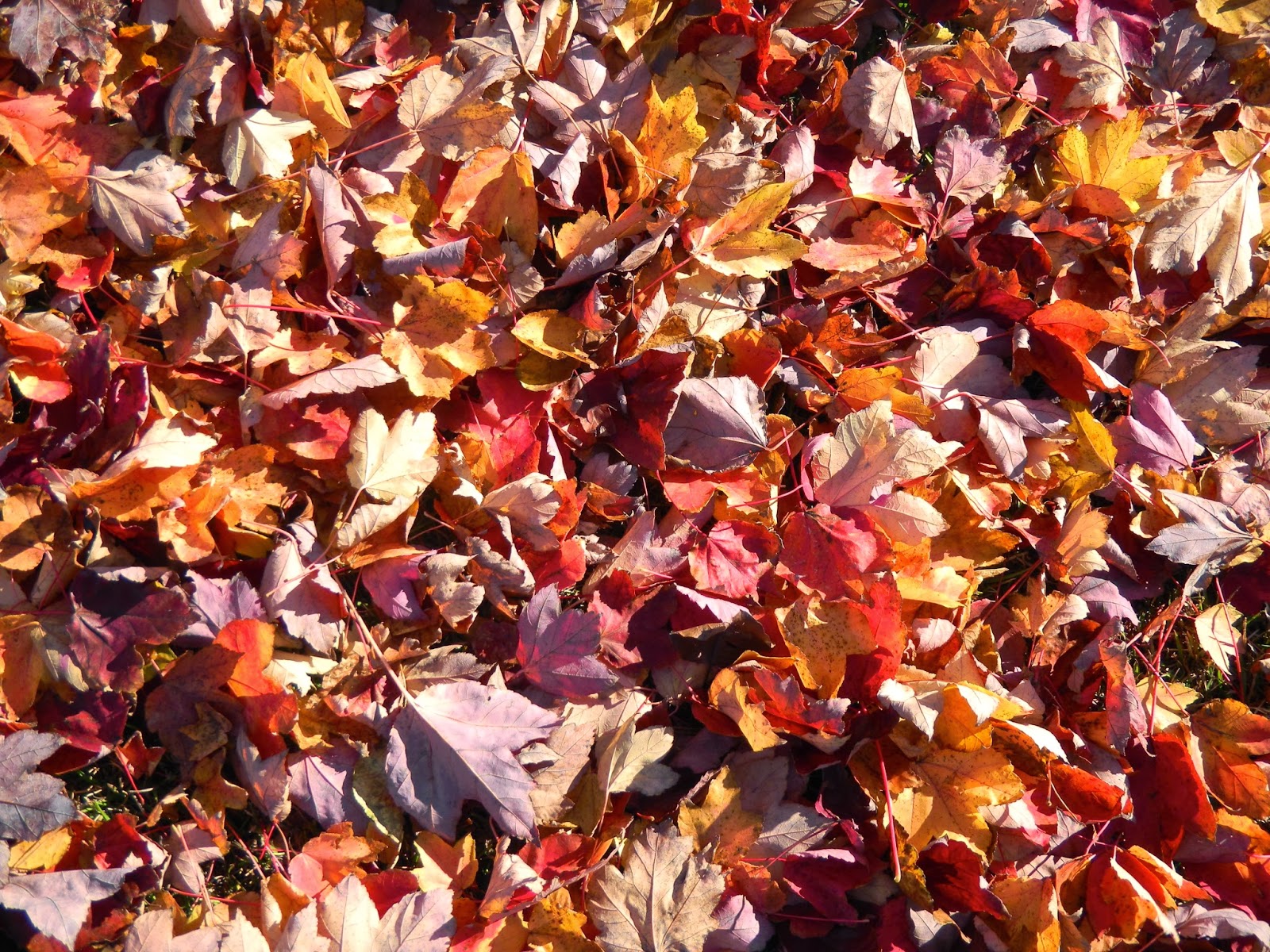
Fallen leaves
With all the extra rain that descended on the Lowcountry during the summer of 2013, I wondered whether we would get a higher degree of fall color than usual this year. I'm no botanist, but I've observed more brightly colored leaves here this month than in any other November since moving to the area more than two decades ago.
Japanese maple and palm fronds
Yellow maple leaves
When I think of autumn in the Lowcountry, I think of Spanish moss dangling from live oaks and of the marsh with its spartina grass turned the color of ready-to-harvest wheat. In the wild, scarlet Virginia creeper and the bright yellow leaves of wild muscadine garland trees and anything else they manage to climb. Dogwoods always provide a bit of color before dropping their leaves. This year I'm noticing more maples and ornamental fruit trees displaying vibrant colors. And I'm loving it.

Mount Pleasant flora
Near creeks and rivers this is what November looks like in Mount Pleasant
Spanish moss dripping from live oak
A typical Lowcountry autumn scene: Live oak dripping with Spanish moss
Vibrant leaves
This year trees display more vibrant leaves than usual
Dried leaves
…but there are plenty of just plain brown leaves on the ground
Virginia creeper, bright red
Virginia creeper can be counted on to add brilliance

Thursday, October 17, 2013

Letter from Taiwan

Temple dragon in Taichung, Taiwan
This temple dragon near Taichung's Botanical Gardens faces a convenience store across the lane

In public spaces here in Taiwan I frequently see jungle geraniums used as shrubs, squared off as if they were boxwood. I have found vertical gardens in both commercial and park settings, living walls indoors and out. I have witnessed orchid foliage and roots attached to trees along a city street in Taichung and orchids in bloom holding on to temple garden trees above Sun Moon Lake.  In a Taipei park I discovered the name of a flowering perennial that blooms wild in my Lowcountry front yard late each August: zephyr lily. Also in Taipei, I attended a bonsai exhibition and was reminded of the tiny pine I'm growing in a styrofoam cup at home,  reminded that I need to be more proactive in mapping out its growth. I've come across tree roots that look like a map of unexplored territory. I've visited a flower market, which turned out to be more like a series of connected plant nurseries rather than the florist mecca I imagined. I've enjoyed the perfume of plumeria blossoms. I've walked among treetops in the Xitou Forest Recreation Area and seen tree ferns that delighted the eye. And I'm not done yet. One day soon I'll visit Taichung's Botanical Garden. Perhaps as early as this afternoon.


Angel's Trumpet
Angel's Trumpet growing near an ancient red cypress tree in Xitou Forest Recreation Area
Why don't my angel's trumpets thrive like this?

Inside a vendor's tall at Taichung's Flower Market

Bougainvillea
Bougainvillea galore

Also at the Flower Market

Downtown Taichung
A segment of the Calligraphy Greenway in Taichung

Calla lily with spider at Xitou Forest Recreation Area
Calla lily with spider at Xitou


Changhua, Taiwan
A lovely tableau in Changhua


Hibiscus at Xitou Forest Recreation Area

A living wall inside a Taichung shopping mall

Orchid attached to tree, Taichung, Taiwan
Orchid attached to tree

Plumeria blossom
Plumeria blossom

Shopping mall exterior in Taichung

Xitou Forest Recreation Area

Tree fern at Xitou
Tree fern in Xitou

Zephyr lily
Zephyr Lily grow in a Taipei park

Tree roots at Shueili Snake Kiln in Taiwan
Amazing tree roots at Shueili Snake Kiln


Luxuriant hibiscus growing near Sun Moon Lake


Bonsai
At the Bonsai Exhibition in Taipei

Taipei Expo Park

Ginger
Ornamental ginger at Syuanguang

The brand new Ikea in Taichung


Sunday, September 29, 2013

A Homeplace Garden


Chesapeake Arboretum
A glimpse of the grounds

Stopping by Virginia's Chesapeake Arboretum with my ninety-two-year-old mother, I feel like I'm visiting my grandparents on the farm. Remember when people grew their own food? In the American South fig trees and pecan trees thrived in backyards. Veggies grew in garden rows. And cannas, hydrangeas, and azaleas provided flowers to be cut for indoor enjoyment. That's what this place is like. 

Caleb Williamson Farmhouse
The Caleb Williamson Farmhouse and its grounds are part of the Chesapeake Arboretum

Canna
Canna


Nature's Classroom


Hungry caterpillars


Hydrangea


Japanese cedar
Japanese cedar


Sprawling fig tree
Sprawling fig tree

My mother sits on a bench shaded by the sprawling fig tree as I wander around the old homeplace. Bluejays call to one another from nearby trees. Occasionally one swoops in and devours some of the abundant ripe fruit. A gardener comes over and says we should help ourselves to some figs. I pick one for my mother and she finds it delicious. 
Lovely trio

Places like this one inspire me and reinforce my long ago decision to turn my suburban lot into a homeplace garden.

For more information about the Chesapeake Arboretum, visit their website: http://www.chesarbor.org.


Name that seed pod! Add a comment below.