Friday, November 29, 2013

Lowcountry, Late Autumn


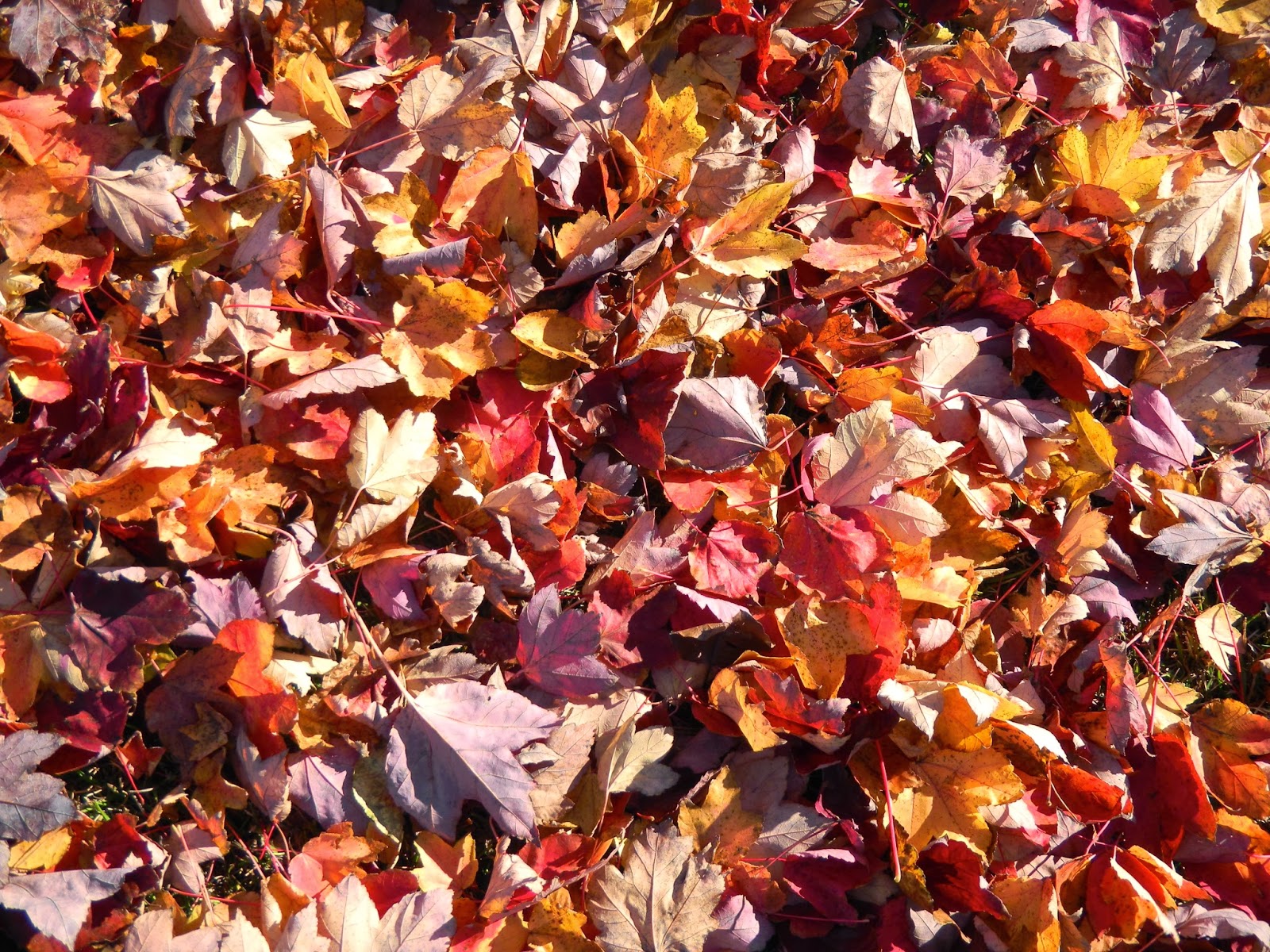
fallen leaves
Fallen leaves
With all the extra rain that descended on the Lowcountry during the summer of 2013, I wondered whether we would get a higher degree of fall color than usual this year. I'm no botanist, but I've observed more brightly colored leaves here this month than in any other November since moving to the area more than two decades ago.
Japanese maple and palm fronds
Yellow maple leaves
When I think of autumn in the Lowcountry, I think of Spanish moss dangling from live oaks and of the marsh with its spartina grass turned the color of ready-to-harvest wheat. In the wild, scarlet Virginia creeper and the bright yellow leaves of wild muscadine garland trees and anything else they manage to climb. Dogwoods always provide a bit of color before dropping their leaves. This year I'm noticing more maples and ornamental fruit trees displaying vibrant colors. And I'm loving it.

Mount Pleasant flora
Near creeks and rivers this is what November looks like in Mount Pleasant
Spanish moss dripping from live oak
A typical Lowcountry autumn scene: Live oak dripping with Spanish moss
Vibrant leaves
This year trees display more vibrant leaves than usual
Dried leaves
…but there are plenty of just plain brown leaves on the ground
Virginia creeper, bright red
Virginia creeper can be counted on to add brilliance

Thursday, October 17, 2013

Letter from Taiwan

Temple dragon in Taichung, Taiwan
This temple dragon near Taichung's Botanical Gardens faces a convenience store across the lane

In public spaces here in Taiwan I frequently see jungle geraniums used as shrubs, squared off as if they were boxwood. I have found vertical gardens in both commercial and park settings, living walls indoors and out. I have witnessed orchid foliage and roots attached to trees along a city street in Taichung and orchids in bloom holding on to temple garden trees above Sun Moon Lake.  In a Taipei park I discovered the name of a flowering perennial that blooms wild in my Lowcountry front yard late each August: zephyr lily. Also in Taipei, I attended a bonsai exhibition and was reminded of the tiny pine I'm growing in a styrofoam cup at home,  reminded that I need to be more proactive in mapping out its growth. I've come across tree roots that look like a map of unexplored territory. I've visited a flower market, which turned out to be more like a series of connected plant nurseries rather than the florist mecca I imagined. I've enjoyed the perfume of plumeria blossoms. I've walked among treetops in the Xitou Forest Recreation Area and seen tree ferns that delighted the eye. And I'm not done yet. One day soon I'll visit Taichung's Botanical Garden. Perhaps as early as this afternoon.


Angel's Trumpet
Angel's Trumpet growing near an ancient red cypress tree in Xitou Forest Recreation Area
Why don't my angel's trumpets thrive like this?

Inside a vendor's tall at Taichung's Flower Market

Bougainvillea
Bougainvillea galore

Also at the Flower Market

Downtown Taichung
A segment of the Calligraphy Greenway in Taichung

Calla lily with spider at Xitou Forest Recreation Area
Calla lily with spider at Xitou


Changhua, Taiwan
A lovely tableau in Changhua


Hibiscus at Xitou Forest Recreation Area

A living wall inside a Taichung shopping mall

Orchid attached to tree, Taichung, Taiwan
Orchid attached to tree

Plumeria blossom
Plumeria blossom

Shopping mall exterior in Taichung

Xitou Forest Recreation Area

Tree fern at Xitou
Tree fern in Xitou

Zephyr lily
Zephyr Lily grow in a Taipei park

Tree roots at Shueili Snake Kiln in Taiwan
Amazing tree roots at Shueili Snake Kiln


Luxuriant hibiscus growing near Sun Moon Lake


Bonsai
At the Bonsai Exhibition in Taipei

Taipei Expo Park

Ginger
Ornamental ginger at Syuanguang

The brand new Ikea in Taichung


Sunday, September 29, 2013

A Homeplace Garden


Chesapeake Arboretum
A glimpse of the grounds

Stopping by Virginia's Chesapeake Arboretum with my ninety-two-year-old mother, I feel like I'm visiting my grandparents on the farm. Remember when people grew their own food? In the American South fig trees and pecan trees thrived in backyards. Veggies grew in garden rows. And cannas, hydrangeas, and azaleas provided flowers to be cut for indoor enjoyment. That's what this place is like. 

Caleb Williamson Farmhouse
The Caleb Williamson Farmhouse and its grounds are part of the Chesapeake Arboretum

Canna
Canna


Nature's Classroom


Hungry caterpillars


Hydrangea


Japanese cedar
Japanese cedar


Sprawling fig tree
Sprawling fig tree

My mother sits on a bench shaded by the sprawling fig tree as I wander around the old homeplace. Bluejays call to one another from nearby trees. Occasionally one swoops in and devours some of the abundant ripe fruit. A gardener comes over and says we should help ourselves to some figs. I pick one for my mother and she finds it delicious. 
Lovely trio

Places like this one inspire me and reinforce my long ago decision to turn my suburban lot into a homeplace garden.

For more information about the Chesapeake Arboretum, visit their website: http://www.chesarbor.org.


Name that seed pod! Add a comment below.

Saturday, August 31, 2013

Stumbling through Heather


Notice the purple tinge on the hillsides


In the Scottish Highlands heather tints the hillsides purple during the months of August and September. And here I am in the sultry South Carolina Lowcountry waxing nostalgic about late summer trips to Scotland. This year I won't be inhaling the crisp Highland air or the delicate scent of heather. You see, I finished the research for my novel Stumbling through Heather and, in fact, have completed the writing.

What most surprised me about heather was how sturdy it is. But then it has to be in order to survive in the harsh environment where it thrives. Heather, also known as ling, is a dwarf shrub with a life span of approximately thirty years. Cross-leaved heath and bell heather grow alongside ling on peaty moorlands. 


Beinn Eighe cloud cap, waterfall, and heather
This heather I photographed growing near the base of Beinn Eighe appears 
more rosy than purple.  Some heather flowers are more pinkish than purple,
others are more magenta.

In his book Introducing Heather, David Lambie states that a single large heather plant can produce as many as 150,000 seeds. No wonder certain hills turn purple when the heather blooms.

Wild heather
Wild heather (Calluna vulgaris) up close
This one is growing along a roadside two or three miles from Loch Ness.
During a stay in Lochcarron I observed domesticated heather growing in a resident's garden. It made me want to create a heather bed of my own. Unfortunately, the climate where I live doesn't suit true heathers. 

Mexican, or false, heather can be found in plant nurseries here, but it lacks the vigor of Calluna vulgaris. And where locally might I find the heather-scented air freshener I remember from my stay in Lochcarron?


Heather growing in the Scottish Highlands


Friday, July 19, 2013

A Pocket Full of Rye

Lamb House roses, Rye, England 2003
Lamb House, Rye, England


June 21, 2003

"Is it hogweed?" an elderly woman asks her friend. 

"I think it's angelica," volunteers a passerby.

Later I hear one of the elderly women tell the only young woman in the garden, "That's angelica with the pom-poms on it, we think."

They settle onto a bench near the wooden arm chair where I sit in the garden at Lamb House. Because I have an assignment to eavesdrop for the fiction workshop I'll be taking with Ann Granger and Angela Arney in a few days, I jot down as much as I can of what I hear. 

The seated women talk of a "loopy" acquaintance who, because she couldn't read, asked a mutual acquaintance read to her a letter from her foster parents. The mutual acquaintance read with great reluctance. The letter detailed how the loopy woman had been locked up under the stairs by her father and beaten by her mother.

"No wonder she's loopy."

The pair leave.

I remain half hidden in the wooden chair. Other garden visitors come and go. A man walks through with a companion. "A series of rooms, isn't it?" he says.

A thirty-ish couple enter the garden and look around. The woman points toward a pom-pom of blossoms and asks, "Is that angelica?"


Garden at Lamb House, Rye, England 2003
Climbing roses at Lamb House


What do literary legends Henry James, E.F. Benson, and Rumer Godden have in common?  Each spent time in residence at Lamb House, a brick Georgian located in the town of Rye, in the south of England. 

I first became aware of Lamb House when I read Rumer Godden's memoir A House with Four Walls, in which Godden says "It was at Lamb House that I learned a little about old roses; there was a whole garden of them round a waterlily and goldfish pond where the Garden Room had once stood...." 

Henry James resided at Lamb House from 1897 to 1916. While there he wrote Wings of a Dove, The Golden Bowl, and The Ambassadors. 

E. F. Benson is said to have used Lamb House as the basis for Mallards, a fictional home in his humorous Mapp and Lucia novels. I began reading Benson's books soon after the Mapp and Lucia television series aired on PBS in the early 1990s, a time in my life when I needed a good laugh. 
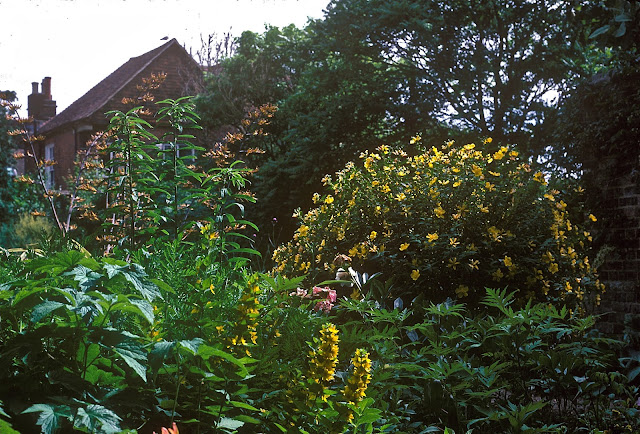

Garden at Lamb House, Rye, England  2003
The garden at Lamb House 

In April of 2003 I came upon a listing for Lamb House in the Gardens to Visit Guide, a free booklet packaged with the BBC Gardeners' World magazine I purchased at Glasgow Airport. According to the Guide, the property "features a charming walled garden that boasts a rich variety of plants, including roses, a gum tree and trumpet creeper." I decided to make a day trip to Rye during a trip to London in June of that same year. 

With the house and garden only open two days a week, and only open in the afternoon, I knew I would have to take care in planning my trip. And I did. In spite of issues with the train and a lack of helpfulness from staff members at Charing Cross Station, I managed to get there.

Arriving in Rye before visiting hours at Lamb House, I lunched at Fletchers House Tea Room where the sedate pace of service slowed further as chef and waitstaff hurried to the door to see and photograph a fellow employee passing by with her uniformed groom on the way from their marriage at the city hall. The bride wore a white sari.

About Lamb House, I wrote:  

It isn't quite as grand as I'd expected. The rooms are smaller. The oak paneling is dry and contracted. I'm sitting in the kitchen garden to the side of the house near where the garden room stood before a bomb blast destroyed it in 1940. Behind the house stands an Indian bean tree.

On my way back to the rail station, I stopped by Cinque Ports Pottery and ordered a ceramic house plaque. I am sorry to report that the pottery closed its doors in 2007. How fortunate I am to have this plaque.
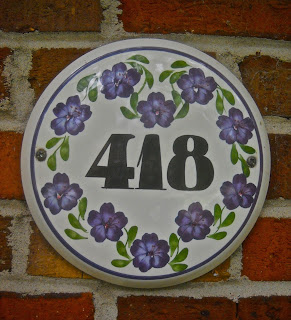
Ceramic house plaque made by Cinque Ports Pottery
Ceramic wall plaque made by Cinque Ports Pottery
Lamb House is a National Trust property. http://www.nationaltrust.org.uk/lamb-house/