Friday, March 29, 2013

Simply Azaleas


Azaleas bloom at Hampton Park, Charleston, South Carolina
Azaleas in bloom at Hampton Park in Charleston, South Carolina

Recently while looking through an old photograph album, I came across snapshots of Norfolk, Virginia's 1976 Azalea Festival Parade.  Azalea Queen Susan Ford, whose father served as US president at the time, graced one of the parade floats. 

Norfolk is but one of many cities in the American South that celebrate the azalea. Next weekend (April 5-7, 2013) Summerville, South Carolina hosts the annual Flowertown Festival. Wilmington, NC holds the North Carolina Azalea Festival (April 10-14, 2013). 

Here in the South Carolina Lowcountry azaleas are bursting into bloom. Drive around old neighborhoods and you see enormous shrubs dwarfing small houses. Magenta blossoms are prevalent in my subdivision, yet many of us homeowners can't resist planting a mixture of azalea varieties. Sometimes their colors clash. 


Azalea growing at Tenryu-ji in Kyoto Japan
Azaleas in bloom at Tenryū-ji, Kyoto, Japan

azalea hedge
A homeowner in my neighborhood uses azaleas as a hedge
George L. Taber azaleas
George L. Taber azaleas are a favorite of mine. One came with the house. I've planted two more.

white azalea blossoms
These white blossoms (growing on azaleas planted by a previous owner of my house) look to me as though they belong in a wedding bouquet
A dropped azalea blossom in Hampton Park
A dropped blossom at Hampton Park

By the way, at some point the Norfolk festival leadership changed its name to the International Azalea Festival. In 2009 they changed its name again - this time to the Norfolk NATO Festival. That is why when you visit the azaleafestival.org website the focus is not azaleas. 

For more information about azaleas, visit the website of the Azalea Society of America: http://azaleas.org/index.html.

Tuesday, March 26, 2013

Hanami: Cherry Blossom Viewing


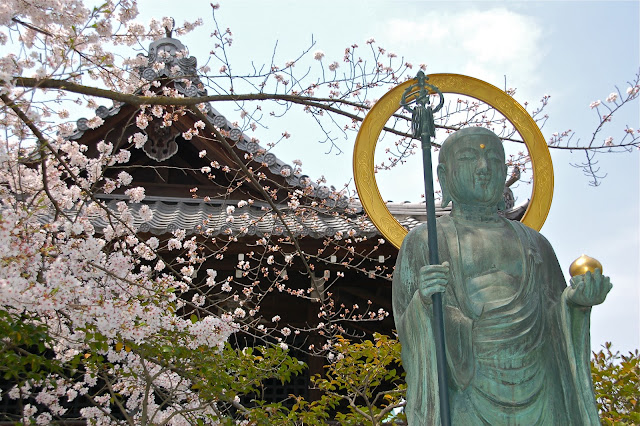
Sakura in Kyoto
Hanami 2011: Sakura in Kyoto, Japan less than a month after the triple disaster to the north

In America when we think of cherry trees it might be in relation to   George Washington, our first president, who according to legend said, "I cannot tell a lie, Father. I cut down your cherry tree."

His namesake Washington, DC is famous for the cherry trees that line its Tidal Basin. My 92-year-old mother recalls my late father's long ago promise to take her there in the spring to see the cherry blossoms. He never kept that promise, which seemed odd to me. 
Living in Virginia during the early years of my childhood, I imagined my father to be a  Washington-like figure. Both were land surveyors. Both had an interest in farming. Both had integrity.

People continue to flock to our nation's capital to see the cherry trees in bloom. This year's Cherry Blossom Festival began last week and extends into April. A Wikipedia entry about West Potomac Park tells the interesting story of how Washington, DC got its cherry trees. The idea originated in the nineteenth century with writer and photographer Eliza Ruhamah Scidmore who had spent time in Japan. 

Weeping cherry in Kyoto
A weeping cherry in Kyoto, Japan
And when it comes to cherry blossom (sakura) viewing, I think of Japan where it is known as Hanami and is taken to the level of a national celebration. I've seen tarps spread out along riverbanks in Hiroshima and Ashiya and in a public park on Kobe's Rokko Island, where families picnic and take in the beauty of the delicate blossoms.
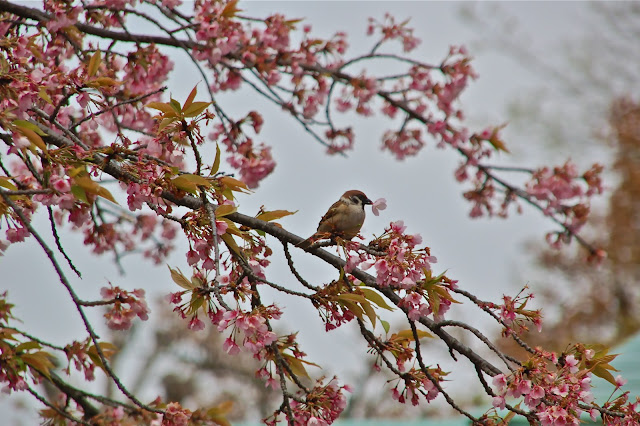

Tree sparrow plucks cherry blossom in Kyoto Japan
A tree sparrow plucks a cherry blossom in Kyoto

Courtesy of Kyoto Journal here's a link to Japan International's 2013 cherry blossom forecast map: http://www.jnto.go.jp/sakura/eng/index.php


Cherry blossoms on young tree in my front yard w/ live oak in the background
The cherry tree I planted in my front yard last year sports its first blossoms in February of this year. (Live oak in the background.)

Thursday, February 28, 2013

Mottisfont Abbey Garden


Mottisfont Abbey Garden in Hampshire, UK
Roses and columbine grow inside the walled garden at Mottisfont Abbey (June 2003)

Aware of my penchant for live flowers, dear friends living in England took me to visit National Trust (UK) property Mottisfont Abbey where we wandered through the walled garden in June of 2003. 

Located near Romsey in Hampshire, Mottisfont became home to Augustinians after the founding of the Priory in 1201, but passed to a friend of Henry VIII after he abolished all monasteries. 

In the 1970s, renowned horticulturist and rosarian Graham Stuart Thomas oversaw the restoration of Mottisfont's walled garden where roses and perennials grow side by side.


Mottisfont Abbey in Hampshire, UK
Pathway in Mottisfont's walled garden
My friends thought I spent way too much time photographing flowers and not enough time simply enjoying the beauty of the garden. What they didn't realize is that I process experience through the creation of art - a photograph, a poem, a story. 

Almost ten years later I'm still grateful for the introduction to Mottisfont. 

Mottisfont Abbey
Perennials in the garden

Yellow roses at Mottisfont Abbey
Yellow roses growing inside the walled garden

For more information about the history of the gardens at Mottisfont Abbey visit the National Trust's website: 


Friday, February 15, 2013

April Showers in February

Hellebore with green blossoms
The hellebore I planted last year blooms again. Note the green flowers on the left.
Rain began to fall just as I dug up the last of the visible Florida betony growing beneath the larger of my two plum trees. Hurriedly, I transplanted alyssum seedlings that had sprouted too close together and sprinkled bone meal around tired daffodils. 

In the autumn, before scattering the alyssum seeds, I had dug Florida betony out of this bed and thought I had done a good job of it. Afterwards I put down a layer of clean topsoil.

When I bought my home twenty-one years ago, the only Florida betony on the property grew at the very back of the lot, having crept in from a neighbor's yard. Just two years earlier Hurricane Hugo had blown down hundreds, perhaps thousands, of trees in this mid-century subdivision. Many homeowners brought in truckloads of topsoil to fill in holes created by the removal of uprooted or broken trees. My guess is that the invasive Florida betony arrived hidden in topsoil. Who would have guessed that we'd still be fighting it all these years later. And losing the battle, I might add.

But this blogpost is not meant to be about Florida betony. It's supposed to be about rain. Over the past week we've had a few days of much needed precipitation. While friends in the Northeast shoveled snow, we avoided streets prone to flooding.

In just one day near the end of last week, rain filled my rain barrel. Subsequent rain pouring off the roof was wasted. Even with all this rain, I've found that dirt in the sandier areas of my yard remains dry. Mulched areas retain moisture. One of the projects I've worked on these past months, albeit slowly, has been to add more mulch, compost, and clean topsoil. 

I know how effective mulch can be, so why haven't I gotten more of the stuff down? It's the usual culprits: time, energy, financial resources.

Last year I mulched several shrubs with recycled cedar I'd bought in bags from a big box home improvement store. I know the cedar was recycled because occasionally I'd find cedar chips still bearing blue paint. This year I've used pine bark chips to mulch blueberries and most of the azaleas. Why didn't I think to do this years ago?

For many years, I mulched with pine needles or didn't mulch at all (other than to allow leaf litter to remain, shredded or not). Our local Lowe's no longer delivers bales of pine needles and I tired of buying two or three bales at a time to pack into the relatively small trunk of my car. I also tired of finding pine needles in the trunk for months after transporting even a single bale. Now I think about how much money I wasted buying pine needles when I could have been buying pine bark. But then I remember why I avoided pine bark early on. 

Only four pine trees remained on the property when I bought this place. Previously, there had been many. The prior owner told me he lost forty trees to Hurricane Hugo and the pine bark beetle infestation that followed. Fear of the beetle, I believe, explains my previous hesitancy to mulch with pine bark. 

Now I have no pines. Two died, perhaps from the lingering effects of infestation. Hurricane Floyd snapped another in half. Lightning struck the fourth and last of the tall pines. Afterwards, the arborist told me I was lucky the tree hadn't collapsed on the house - the bottom of the tree had not been solid.

Do I want more tall pines? No. No one who lived in this area when Hurricane Hugo struck wants tall pines within falling distance of a house.

Yes. I'm off topic again.

Rain. Rain on a tin roof - one of the most soothing sounds on earth. As a child I loved being inside my grandparents' house during heavy rain or even during light rain with just the occasional gentle tap on the roof.

Rain falling on a windstorm-damaged roof evokes quite different feelings. Even after repairs have been made to the roof, one finds oneself placing pots and bowls in the attic, along with stretched out plastic shower curtains, to catch the rain and prevent dripping into rooms lying beneath the leaky areas. 

How lovely to have a sound roof!

And how lovely to have a solid front door, made of something other than wood. (Even though I love wood.) The way my house is built, a valley in the roof pours water directly onto the front stoop. Over time gallons of rain splash against the front door. And within a few short years of my moving here the wooden front door rotted. During boom times I had difficulty finding someone to come replace it. Allow me to spare you the details of how in desperation I inadvertently hired a bonafide crook to replace the door.

One night earlier this week after taking a long soak in the bathtub, while reading a good book and listening to the patter of rain outside, I went a little crazy. In a good way. I fired up my laptop and selected items from three different plant nurseries on-line. Ultimately, I restrained myself and ordered from only one. A month from now I expect to receive lily of the valley, red coral bells, bear's breeches, Purple Sunset pomegranate, Pistachio Reblooming hydrangea, Royal Red hydrangea, Incrediball hydrangea, a hardy hibiscus collection (Blue Bird, Aphrodite, Helene, and Freedom), a grab bag of sun-loving perennials and a bag of shade-loving ones.

After these arrive and settle into my front garden, I'll be looking for April showers in April.

What are your favorite rain related songs? In no particular order, here's a list of mine:

Bus Stop - The Hollies
Why Does It Always Rain on Me? - Travis
Have You Ever Seen the Rain - Creedence Clearwater Revival
The Rain, the Park & Other Things - The Cowsills
Rainy Days and Mondays - Carpenters
You and Me and Rain on the Roof - The Loving Spoonful
Raindrops Keep Falling on my Head - B.J. Thomas


Your comments about rain and gardening are welcome.


Thursday, January 31, 2013

Camellias in Bloom


Camellia
My late grandmother Chessie Pearce's camellia
Camden County, North Carolina
Photographed by Edward L. Pearce

This past Saturday the Coastal Carolina Camellia Society held its annual camellia show. According to the Society's FaceBook page, more than 1,000 blooms were entered. I intended to go across town to view the entries, but got busy and forgot until too late. What a great opportunity it would have been to learn more about camellias.

My grandmother, Chessie Pearce, grew a camellia tree in her garden. The tree is at least sixty-five years old but possibly much older. My brother Edward remembers our grandmother saying camellias should be planted on the north side of a pine and also remembers her calling her tree a japonica. Sometime during the 1970s temperatures dropped below zero and the freeze damaged Grandmama's tree. After Edward cut it back to about five feet, it revived. Now, forty-five years after our grandmother's death, the tree is approximately eighteen feet tall and blooms prolifically. 


Camellia tree
Chessie Pearce's camellia tree is more than 65 years old
Photographed by Edward L. Pearce

My knowledge of camellias is not extensive. I'm familiar with japonicas and sasanquas, and with camellia sinensis, the tea plant. These are not, however, the only species of camellias and after doing a bit of reading, I realize it's quite possible that some of the camellias I believed to be japonicas are not.

Here's the local conventional wisdom: Japonica blossoms make beautiful cut flowers, perfect for floating in a glass bowl indoors or in a birdbath outdoors. Sasanqua blossoms don't last when cut. 

Where I live, the sasanquas usually bloom from September to November and japonicas bloom in the winter. 


Variegated camellia japonica
This red and white variegated variety 
grows in my front yard

Camellia japonica
This cream colored camellia sporting 
a wealth of stamens grows near my front door
 
Variegated camellias
A pink and white variegated variety
 growing in my front yard

My one-third acre lot contains a number of camellias. Some, or all, of the seven that came with the house, when I bought it, had been transplanted here from Summerville when the prior homeowner moved his parents into assisted living. One of the seven budded yearly, but never bloomed, and succumbed during a cold winter several years ago. A single one of the remaining six is a sasanqua, which I've had cut back, but has resumed growth. I always assumed the other five were  of the japonica species, but after perusing the American Camellia Society's website this afternoon, I'm not so certain.


White camellia japonica
This white camellia japonica is one I bought, from a plant nursery or garden center, and planted perhaps as much as ten or twelve years ago. It's at the back of the lot and gets little sunlight. Perhaps that's why it's stingy with its gorgeous blossoms. 


My older japonicas produce seeds. In the last three years volunteers have sprouted under an old pink-blossomed tree. With varying success, I've transplanted seedlings to other spots in my yard. I've also given a few away.

When I intentionally planted camellia seeds in the past, either they didn't grow, or I forgot where I planted them and accidentally mowed them down. The seedlings are similar in appearance to those of the homely wild cherry trees that, due to bird droppings, each year produce hundreds of seedlings under my huge live oak and a variety of other shrubs and trees. 

My sister Martha Ann in northeastern North Carolina had success growing a camellia from a seed I gave her years ago. One of her animals, a goat, attempted to eat the small shrub, but now it's growing back.


Camellia seeds and seedpods
This past August I harvested seeds from the five older japonicas
I have not yet taken on the task of identifying the varieties of my camellias. Nor have I been a particularly good steward of them in the past. I hope to remedy that.


Formal double camellia in South Carolina
On the grounds of the Berkeley County
Library, Daniel Island, SC
Formal double camellia growing in Japan
On the Rokko Island greenway, Kobe, Japan


As a result of having family members living in Japan, I have been able to view camellias in bloom at Tenryū-ji and other gardens in Kyoto, as well as, in and around Kobe. 


Camellia tree Kobe, Japan
One of a group of camellia trees growing out of rock
 on a hillside above Kobe, Japan in late November

There are plenty of opportunities to see camellias blooming in the American South. At this time of year a stroll through older neighborhoods, such as the one where I live, is a treat for a camellia lover. 

Two weeks from today, Middleton Place begins its annual guided Camellia Walks. Botanist Andre Michaux is said to have introduced the camellia japonica there around 1785. 

Camellia tree
This japonica by my laundry room thrives on afternoon sunlight but needs some TLC


Camellia seed pods and pear in situ
Seed pods in situ
Transplanted camellia seedling
A volunteer that I transplanted

Camellia tree at Tenryu-ji in Kyoto, Japan
April at Tenryū-ji temple gardens in Kyoto, Japan
Camellia blossom in Kyoto, Japan
A leaf wants to hide this pretty pink blossom at Tenryū-ji

Variegated camellia at Tenryu-ji in Kyoto, Japan
A variegated blossom at Tenryū-ji 

Camellia blossom

This one grows by my laundry room


Thank you for visiting The Traveling Gardener. 
Your comments are welcome.